


FRC Toolkit
Helping staff connect caregivers with important resources at Seattle Children's Hospital.
Helping staff connect caregivers with important resources at Seattle Children's Hospital.
How might we raise awareness about the services offered by the Family Resource Center (FRC) at Seattle Children’s Hospital, particularly those related to informing and assisting caregivers?
FRC Staff
Caregivers - parents, guardians, family, or friends who come into the hospital with the patient and support them throughout their stay.

Lead Designer
UX Researcher
Jamie Vanderwall
Maya Klitsner
Alison Gray

March - June
(3 Months) 2020
For best viewing experience, please download PDF.
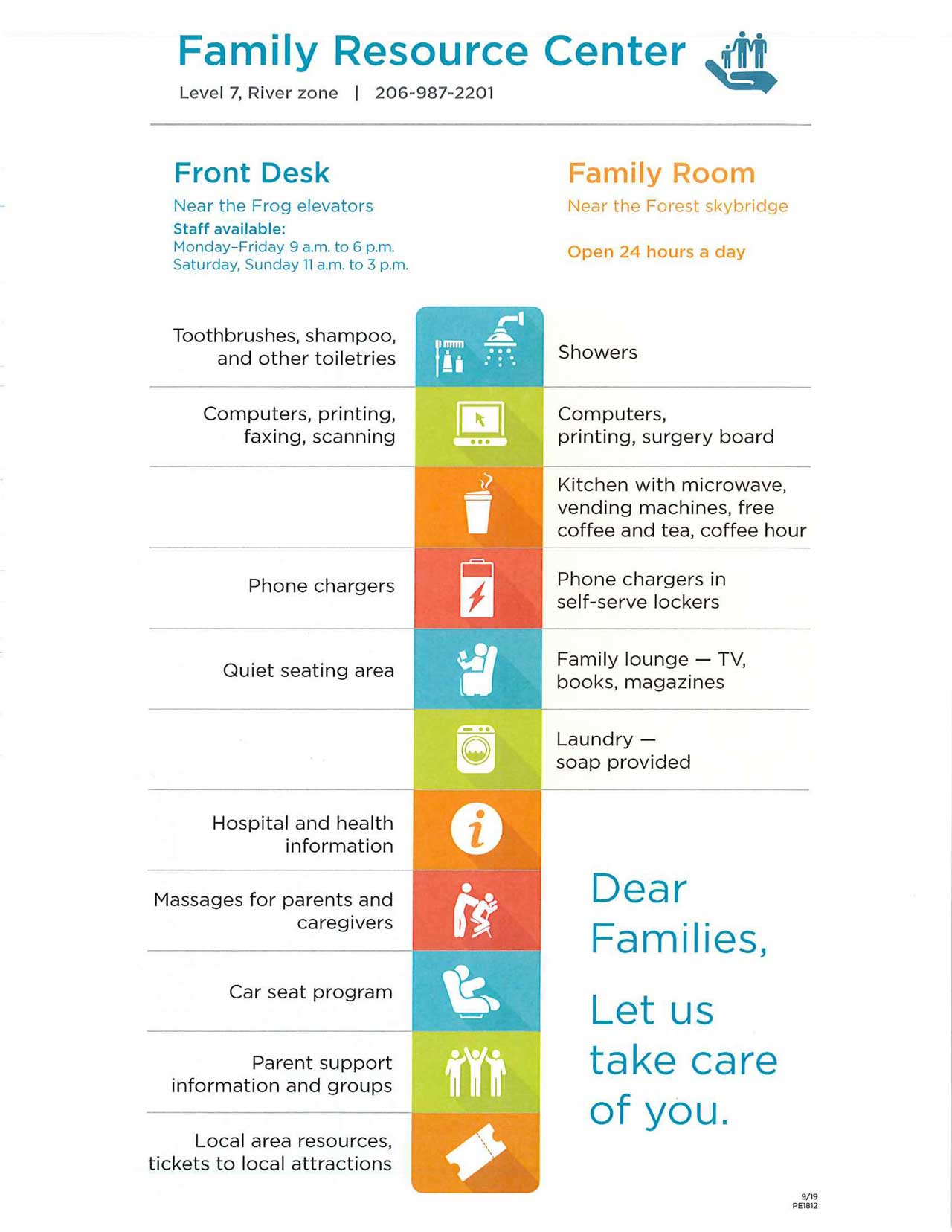
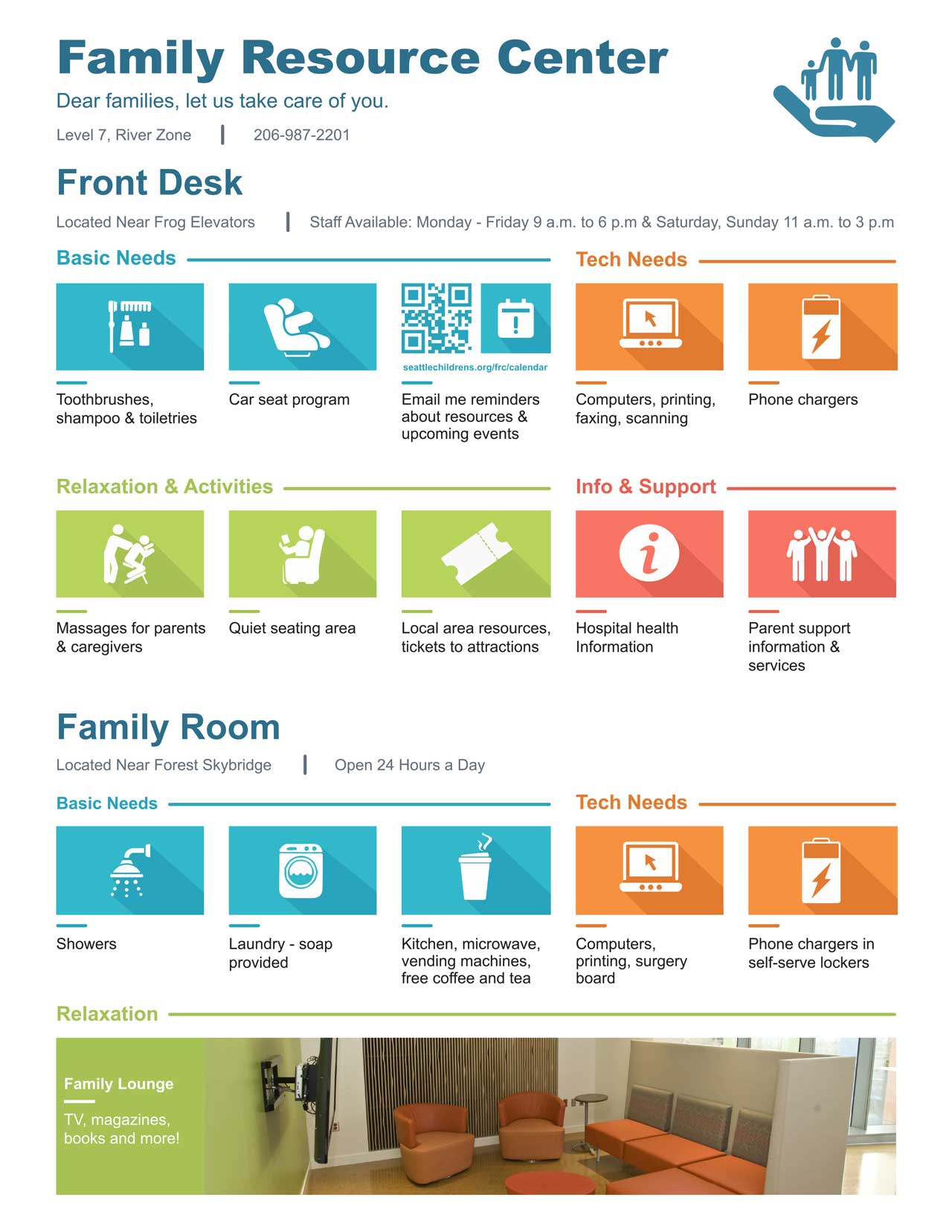
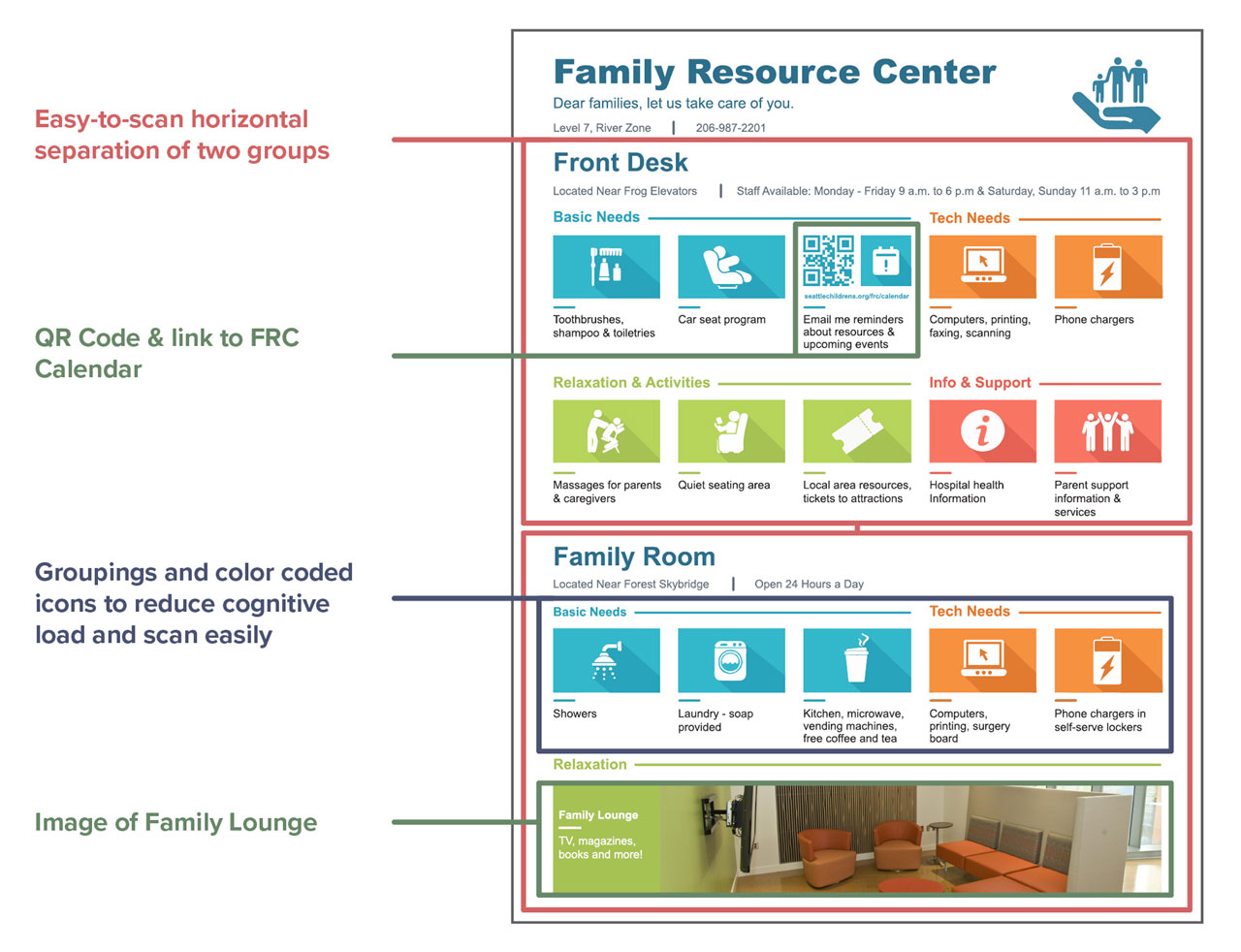
In her usability evaluation, my teammate, Alison Gray discovered that the current FRC flyer is confusing and very difficult to scan quickly. I took her findings and recommendations and redesigned the FRC flyer to be more clear and reader-friendly. I also include elements that connected it to the larger outreach strategy that we were proposing in our toolkit. My teammate, Jamie Vanderwall, provided input and feedback throughout the process.
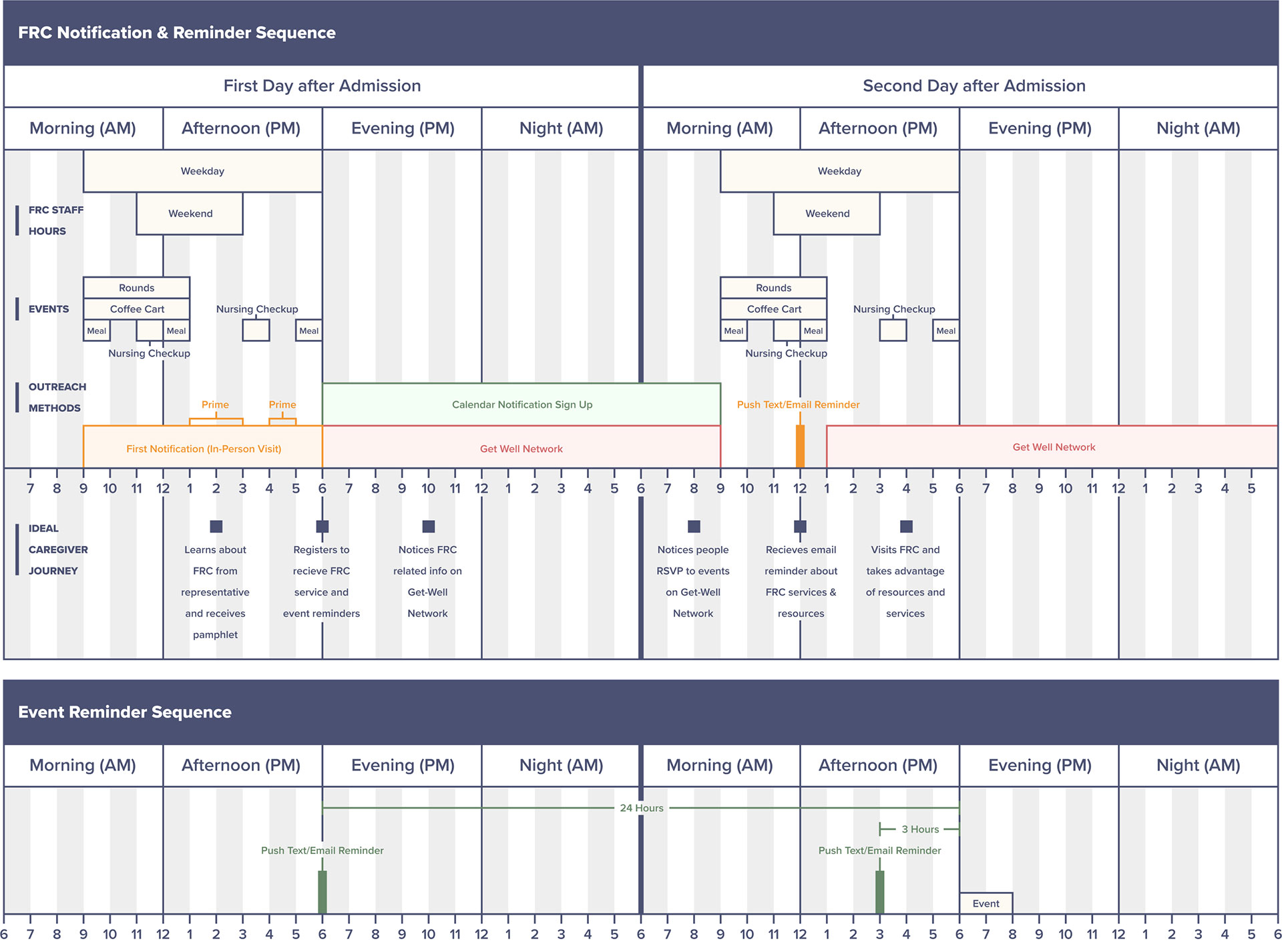
We wanted to give the FRC staff a visual guide for the ideal timing of all the outreach methods we were proposing. This timing came from our survey results in the research phase. With feedback from my teammates and input from the FRC staff, I designed a journey map that displayed the ideal caregiver journey in their first two days of admission in the hospital.
Even though it is well known that caregivers are vital to positive patient outcomes, caregivers are often understudied and unsupported by the healthcare system. The FRC staff reported not understanding the effectiveness of their resource communication strategy and were interested in learning more about caregiver experiences to determine optimal intervention times.
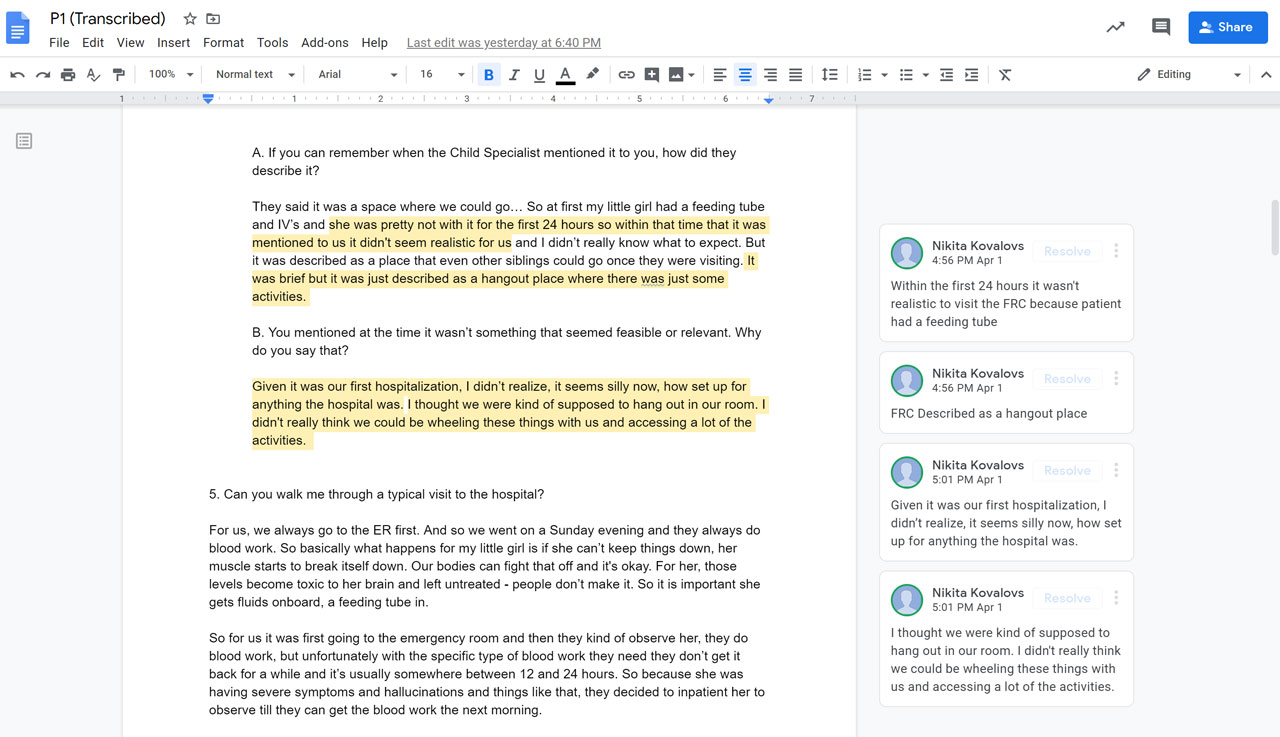
As a team, we conducted four remote semi-structured interviews to learn more about how caregivers interact with the FRC. I conducted and transcribed one of these interviews.

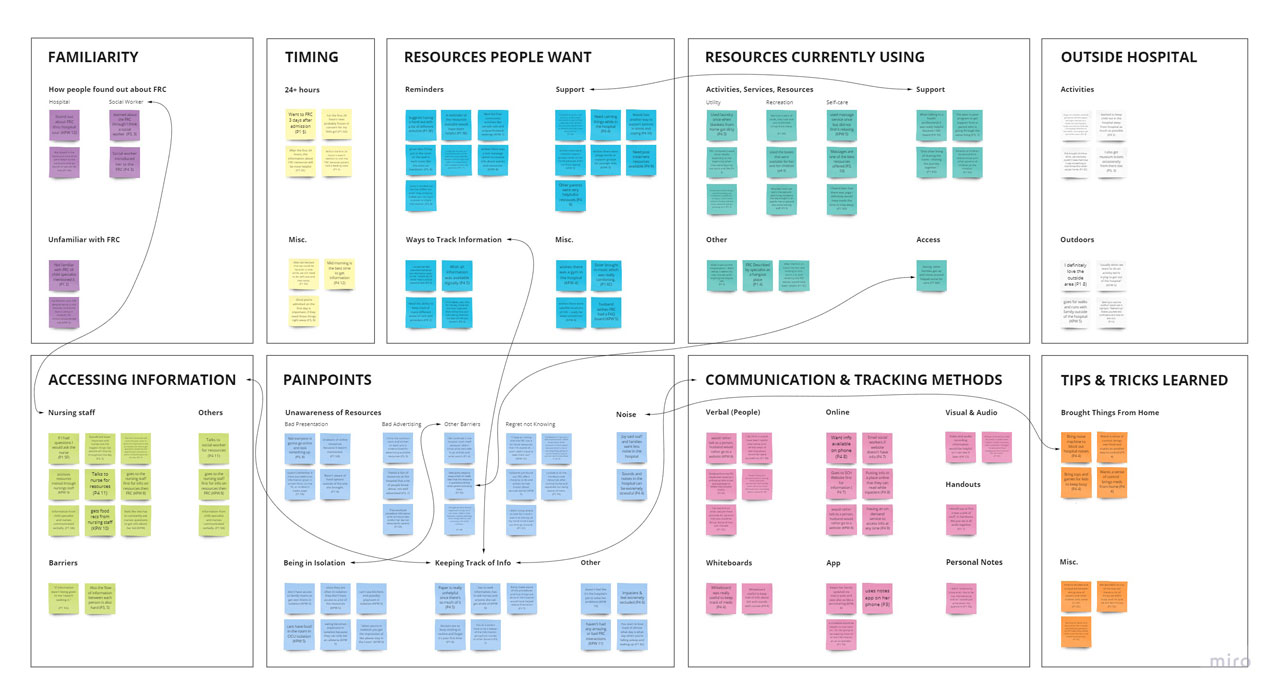
I parsed my interview into codes and later helped analyze our collective research using affinity diagramming. We used this method to find salient caregiver behaviors, values, and paint points.
To validate our interview findings on a larger scale, we wrote and sent out surveys to caregivers. I assisted with writing survey questions and making sure that we were addressing all of our research questions.
We received a total of 44 survey responses. I analyzed qualitative answers to the free response questions using affinity diagramming while my teammates analyzed the quantitative data using data visualizations.
%20(1).jpg)
1. The majority of people want to be initially notified quickly of the FRC’s services, with most people saying within the first 24 hours.
2. For all notifications and reminders, people prefer in-person visits, posters in each patient room and throughout the hospital, and text/email notifications.
3. People want to receive reminders of both events and services.
4. In general, people prefer to be visited and notified of resources in the afternoon after rounds and between nursing checkups.
Our team presented the results of our user research to the FRC staff to consult about which design opportunities we should pursue and to discuss constraints.
The hospital has many regulations about design and procedure and there was no way for us to meet with every governing body and stakeholder in the short time that we had to do this project.
There are very strict restrictions on displaying posters in the hospital and the TV’s displayed throughout the hospital are already very saturated with content.
The FRC staff were interested in implementing a calendar system that could be used to display hospital events and wanted us to look into potential solutions.
Taking our research findings, constraints, and conversations with stakeholders, I documented our ideas in a mindmap to visualize connections and help brainstorm solutions.
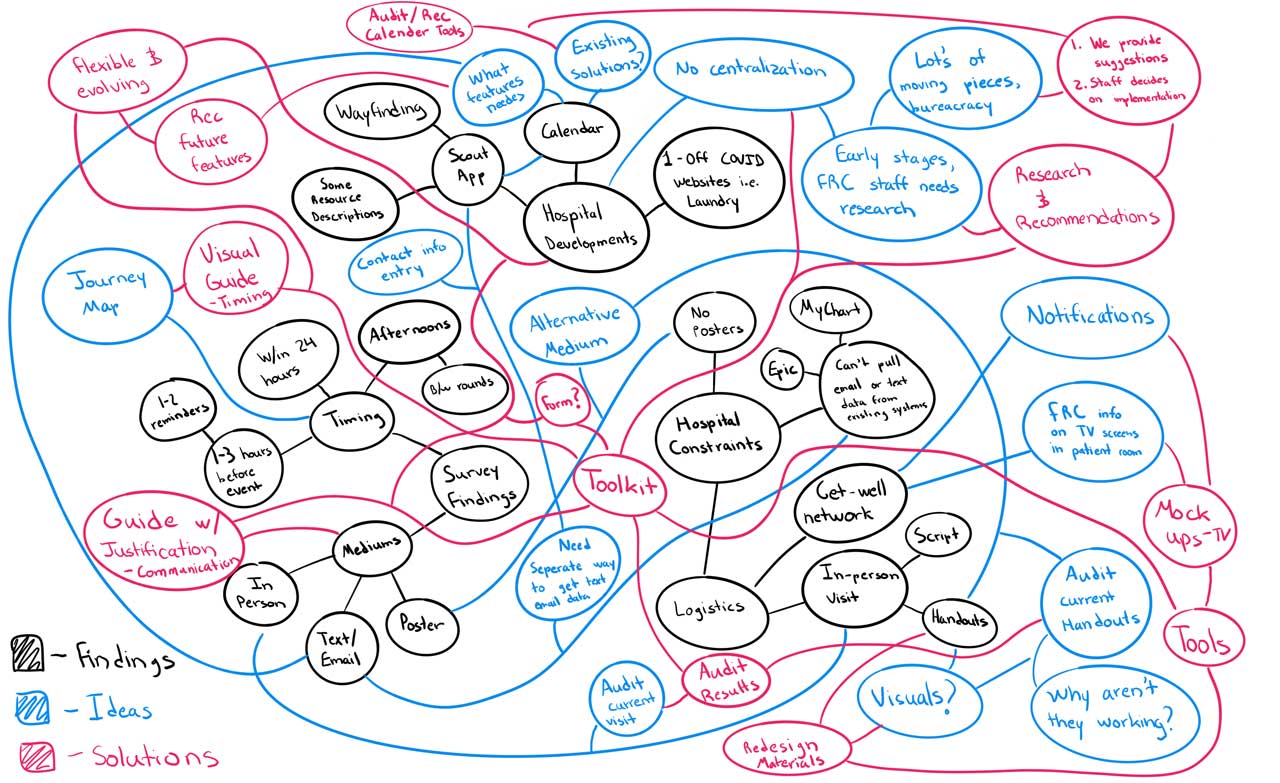
Based on our research findings and constraints, we identified three key outreach methods to look further into and deliver recommendations about:
Alison Gray evaluated the script used during an in-person visit as well as the materials handed to caregivers.

Maya Klitsner evaluated different calendar systems that met the needs of caregivers and FRC Staff.

Jamie Vanderwall evaluated the Get-Well Network, a closed network that provides patients entertainment and hospital information.
Given the bureaucratic constraints we were facing and the multi-faceted nature of the FRC's outreach strategy, we decided it would be more effective to deliver a toolkit to the FRC staff that would give them the framework and materials needed for spreading awareness about their services rather than trying to implement a single design solution on our own.
While my teammates conducted evaluations of the key outreach methods, I looked at different forms of toolkits to identify design patterns that could inform our design. After consulting with the FRC staff, we decided that an interactive PDF document would be the best fit for their needs.
To expedite the process of putting together a toolkit, I built a design system that took advantage of global components and grids, while my teammates gathered all of the content and illustrations in an outline. I designed and assembled all 44 pages of the final toolkit.
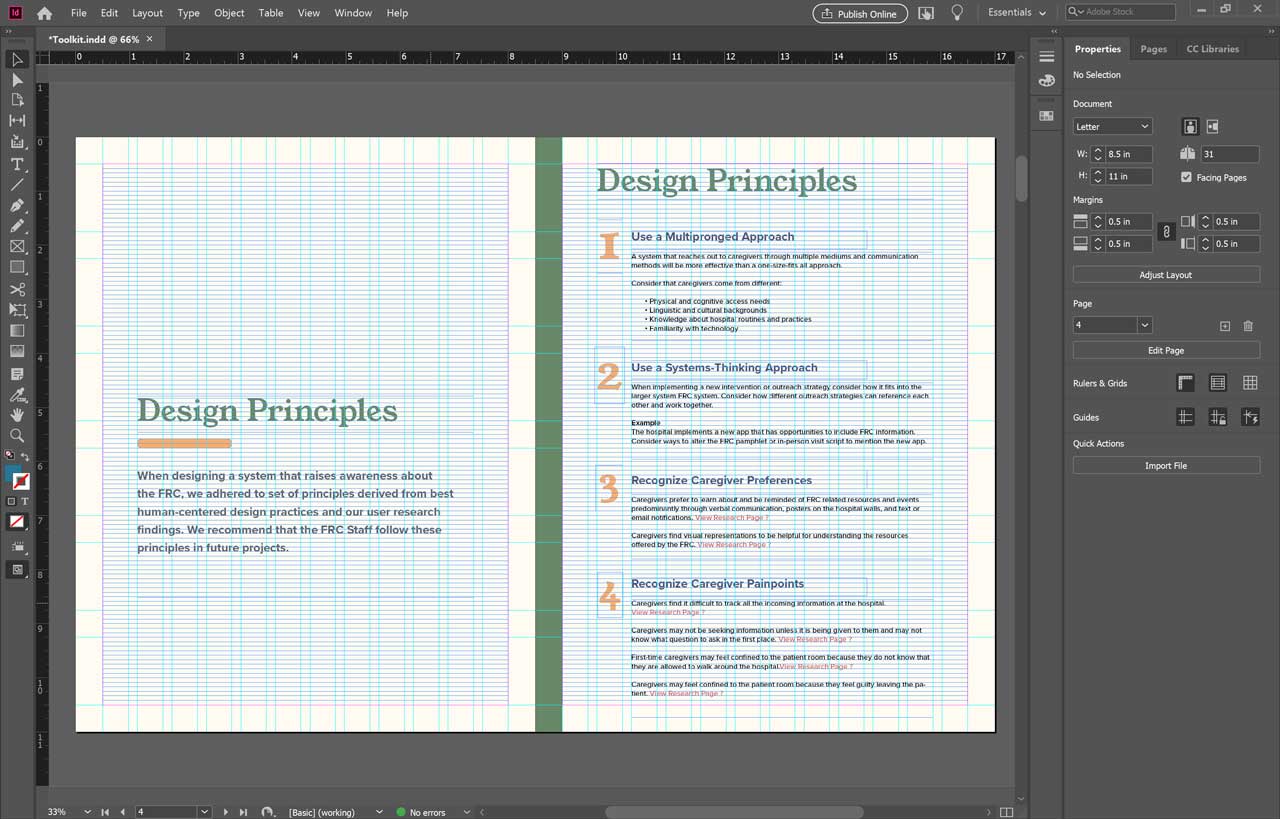
We wanted the FRC Staff to be able to quickly refer to key sections in our toolkit. Using a tile-based table of contents, side-bar links, and tags, I created a navigation system that gave them the flexibility to navigate the document non-linearly.
Drawing inspiration from the toolkits I looked at in my competitive research, I decided to present the table to contents in a tile-based form. I chose this presentation to make the sections appear more clickable. A traditional table of contents format lacks the signifiers that communicate interactivity.
To enable the FRC staff to return to the table of contents or other key sections quickly I created a side bar navigation that was accessible on every page.
At the beginning of the toolkit, we included a set of design principles that guided our proposed outreach strategy and was intended to guide future FRC projects. Each time we proposed a design recommendation that was reinforced by one of these principles, we tagged it with a reference back to the design principles page.
